
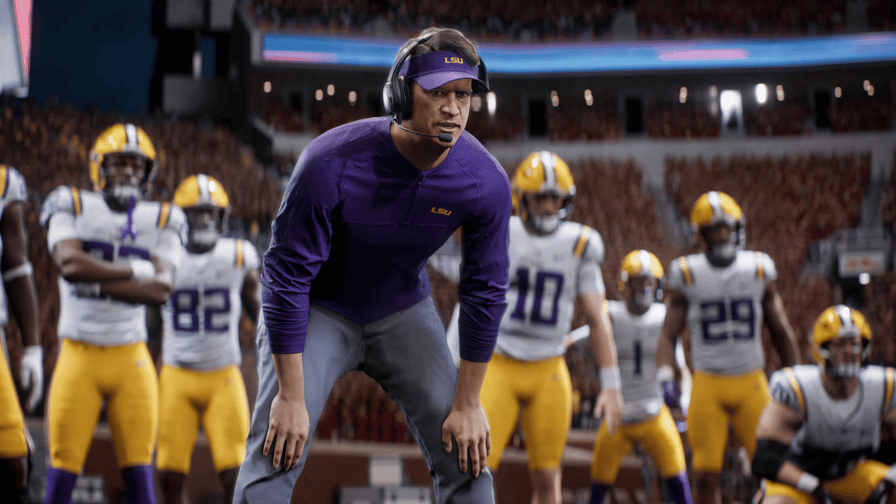
Every year, EA comes out with updates that get overlooked or don't make a huge difference year to year. This offseason, EA went deep into the tool bag, adding Formation Shifts in EA Sports College Football 27 as one of those features that actually changes things. And if you're not already thinking about how to weaponize it, your opponents are.
This isn't just another cosmetic tweak. This changes the entire offense-defense relationship before the ball is even snapped. Let me break down what's changing, and more importantly, what it means for how the game is going to be played at the highest level.
So, What Exactly Changed?
Formation Shifts are returning to the game with what EA is calling a "more modern and authentic implementation." Here's how it works in plain terms:
- Choose your base play from the play call menu
- Flick the right stick left or right to toggle Formation Shifts
- Cycle through eligible formations with matching personnel
- The selected formation appears in the bottom right corner of the play call menu
- Your team breaks the huddle in that shifted formation, then executes the original play
The key detail EA emphasized: the personnel stays the same, only the presentation changes. You're not swapping in new players. You're showing the defense a completely different picture with the exact same pieces.
Real Football Already Showed Us This Playbook
This isn't just a video game concept. The best offensive minds in college football have been running this exact philosophy for years. The clearest real-world comparison? Andy Kotelnicki.
Kotelnicki's offenses, from his time as OC at Kansas, to Penn State, and now back at Kansas as Associate Head Coach, are built around creative motions, unbalanced sets, and constant personnel shifts before the snap. The goal isn't just to be unpredictable. It's to force the defense to talk. To communicate. To reveal whether they're in man or zone. To get one defender caught in no-man's-land between assignments.
Sound familiar? That's also the core philosophy of the Shanahan offensive tree, the Kyle and Mike Shanahan school of using motion and pre-snap movement to create leverage before the snap. You shift. The defense reacts. Now you know exactly what you're getting. You've already won half the rep.
In CFB 27 that concept is now in the hands of every player with a controller. The best users are going to treat Formation Shifts the way Kotelnicki treats pre-snap motion, as an information tool, not just a deception tool. Come out in 5-wide, shift into Ace, see how the linebackers rotate. Come out in I-Form, shift to Shotgun Spread, watch the corners bail. You're reading the defense before you've called the play.
Why This Is Going to Be Meta, Immediately
Here's the thing about elite CFB players: they already knew how to exploit defensive misalignments. In previous years, come out in Trips Left, shift to Trips Right, and the nickel corner doesn't always follow. Coming out in a Wide Bunch formation and audibling to a tighter set would sometimes leave safeties frozen in the wrong spot. The defensive AI has always had alignment ceilings, and the best players found every crack in that ceiling.
The Writing Is on the Wall: This Will Get Exploited
I want to be real with you: I love the addition of this feature, and I also know exactly how this ends.
Someone is going to come out in a 5-wide spread formation, shift into I-Form, and hand it off on an HB Dive before the defense has finished rotating. The community is going to find the worst-case scenario, the one where formation shifts expose a hard-coded alignment error that turns a basic inside run into a 70-yard gash play. It always happens. That's not a criticism of EA; it's just how the ecosystem works.
The key for the developers is whether the defensive AI can realistically adjust in the time window provided. If safeties and cornerbacks can't communicate and rotate before the snap animation completes, this feature will swing the competitive balance hard toward the offense.
Final Thought
Formation Shifts returning to CFB is one of the most exciting pre-snap additions the franchise has seen in years. Done right, it bridges the gap between sim football and the real strategic chess match that happens on the field every Saturday. Kotelnicki's Penn State offense proves that shifting and motion aren't just gimmicks; they're a legitimate system.
The question isn't whether this changes the game. It will. The question is whether you're going to be the one exploiting it, or the one getting exploited.
The question I'll leave you with: Do you think Formation Shifts give the offense an unfair advantage, or is this exactly the kind of depth CFB needed? Let me know in the comments.
Comments